
Sex Offender Checks in Lane County
The public Oregon Sex Offender Registry supports name and geographic routes. Lane County does not operate a separate public list documented in the research. The Lane County Sheriff's Office and city police act as registering agencies according to residence, work, and school facts, while OSP manages the public system.
Begin with a full name when checking a known person. For neighborhood awareness, use address, city, ZIP, county, map, or list controls available on the live search. Match more than a name. Physical description, aliases, offense details, and registration status help distinguish profiles.
Empty Lane Results Prove Little
Oregon notification levels do not mirror the federal SORNA tiers. The public site chiefly reflects Level 3 registrants who receive broad notice. Level 2 uses targeted community notice, while Level 1 notification is narrower. Therefore, a blank map or name search cannot establish that no registered person lives nearby.
OSP may provide protection-related information about a specific person or area as authorized by law. Contact the proper registering agency when the public display does not answer a concrete safety question.
How to Search the Oregon Sex Offender Registry
OSP's Sex Offender Registration Section runs the Oregon search. Exact radius options were not reliably exposed during research, so rely on the labels shown in the live portal rather than assuming a set distance. Search and reset controls change the result view without altering the legal scope of public notice.
- Open the Oregon registry and read its conditions of use.
- Choose a name route or narrow the geographic route by address, city, ZIP, or Lane County.
- Switch between map and list views when available, then compare identifiers rather than relying on proximity alone.
- Open the profile and review notification level, offense, status, location detail, and update information.
| Field Label | Type | Required | Notes |
|---|---|---|---|
| First and Last Name | Text | Depends on route | Use the name route for a known person |
| Address or Location | Text and map | Depends on route | Starts a geographic search |
| City or ZIP | Text or dropdown | No | Narrows the geographic results |
| County | Dropdown | No | Select Lane for county results |
| Map or List | Tabs or controls | No | Changes the result presentation |
OSP and Lane Registration Roles
OSP sets statewide registry guidance and manages the public site. Lane County Sheriff headquarters is at 125 East 8th Avenue in Eugene and can be reached at 541-682-4150. The OSP registry information line documented through Lane's VISOR material is 503-934-1258. Confirm the proper agency because registration can turn on residence, employment, and school facts.
The OSP registration program source outlines statewide duties.
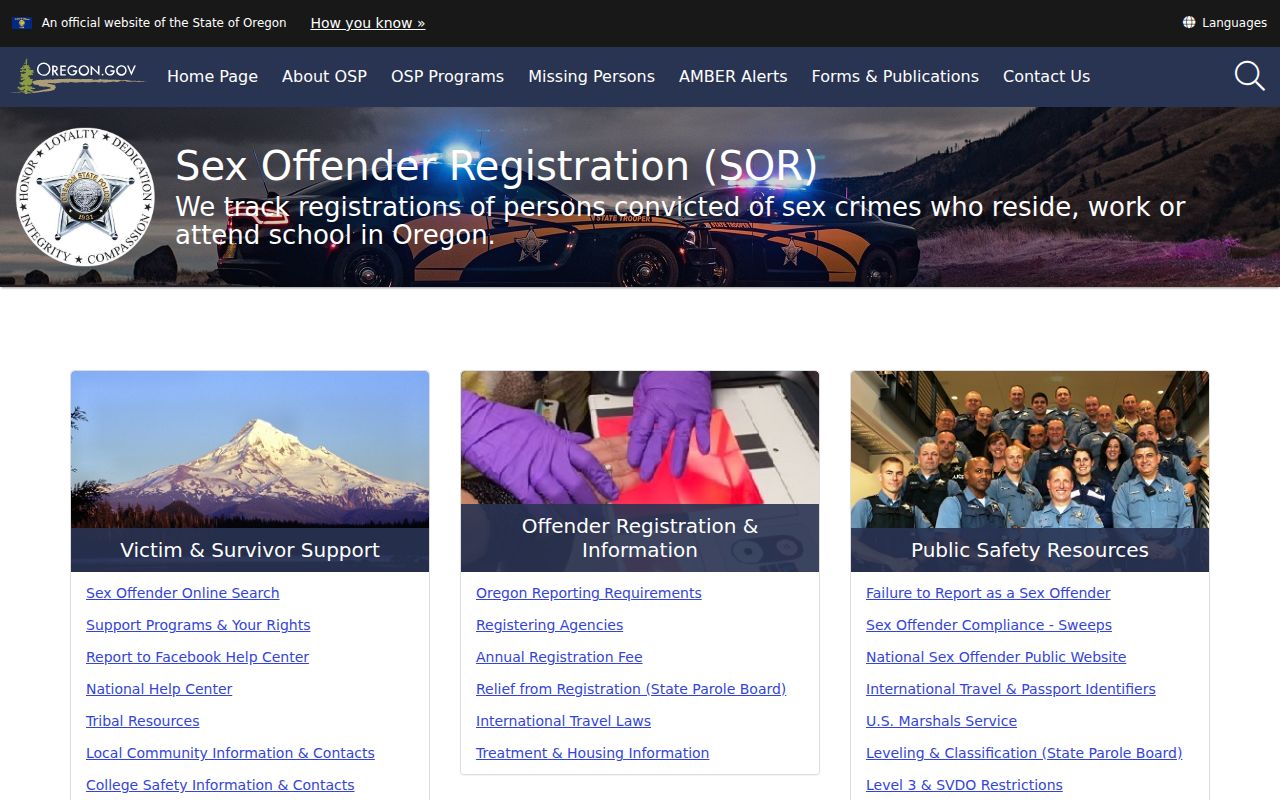
The program page is also the sound place to confirm current reporting and relief rules before acting on old information.
Inside a Registry Profile
A public profile can combine identity, location, offense, and status fields, but not every profile contains each field. Address detail can vary with the scope of lawful notification. Review the whole record and its date rather than treating one map pin as complete.
| Name and Aliases | Displayed identity names used to distinguish a person. |
|---|---|
| Photo and Description | May show sex, race, height, weight, hair, eyes, age, scars, marks, or tattoos. |
| Authorized Location | Public residence or location detail allowed for the notification level. |
| Offense and Statute | Qualifying offense, jurisdiction, statute, and conviction date when public. |
| Notification Level | Oregon Level 1, 2, or 3, not a federal tier label. |
| Registration Status | Compliance or other public status and available verification information. |
OSP Registry Versus NSOPW
The Oregon registry is the primary state source for Lane County. The National Sex Offender Public Website searches participating jurisdictions across state lines. It is useful when a person moved, an address is near a border, or a search should reach beyond Oregon.
The national registry source image shows the cross-state search layer.
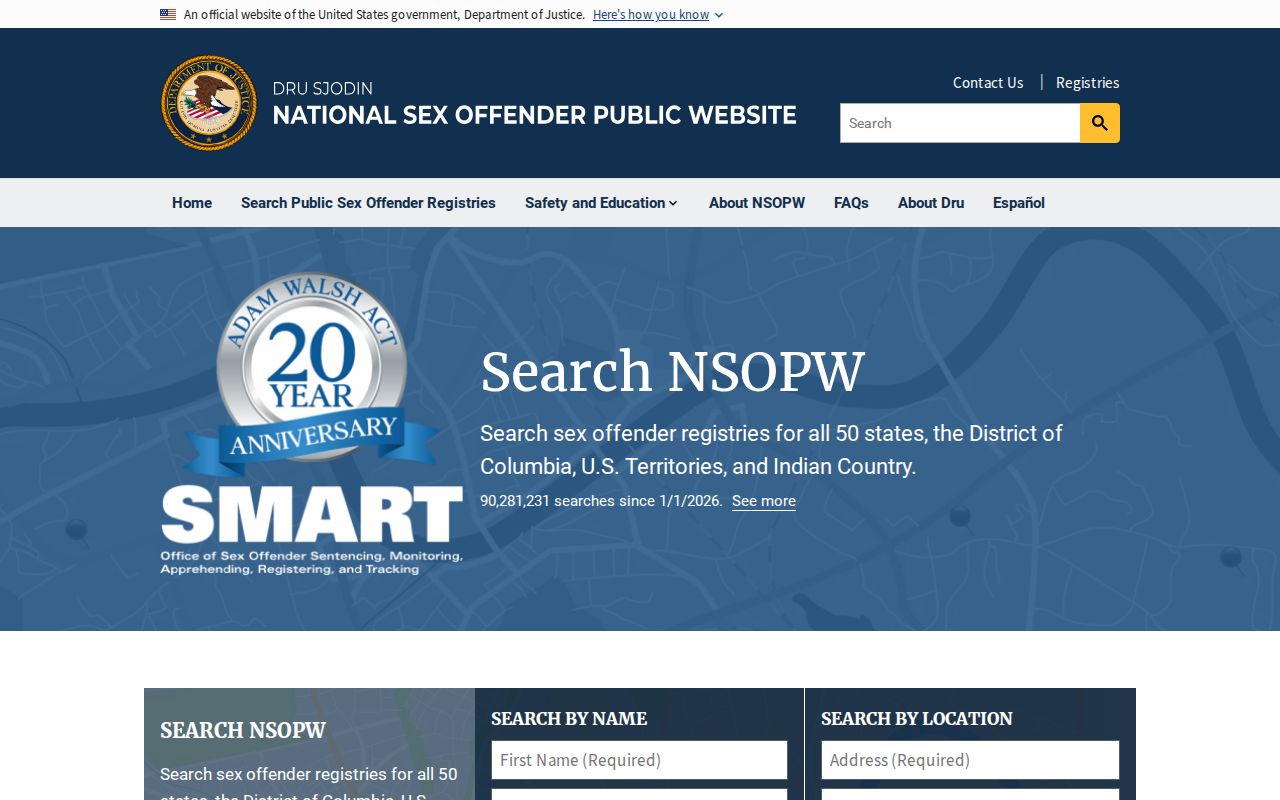
NSOPW aggregates public jurisdiction data. The originating state or local agency remains the place to verify a record.
Oregon Registration Levels and Requirements
Oregon assigns notification Levels 1, 2, and 3 according to state law. These levels control the scope of notice, not a simple fixed registration term. Reporting is generally ongoing or lifetime unless statutory relief is granted. Verification duties depend on the controlling record and should be confirmed with the registering agency.
| Oregon Level | Notification Scope | Public Website Visibility |
|---|---|---|
| Level 1 | Narrow notice, potentially including people who reside with the registrant | Generally not listed merely because of Level 1 status |
| Level 2 | Targeted notice to significant relationships and relevant community places | Not automatically posted broadly |
| Level 3 | Widest notice, including local or regional media | Included on the OSP public registry |
Oregon Relief Is Not Automatic
Oregon does not use a simple ten-year, twenty-five-year, or lifetime table. A Level 1 registrant may petition for relief after at least five years since supervision for the sex offense ended. A person reduced from Level 2 to Level 1 waits five years after reclassification. Certain serious offenses and some people originally classified Level 3 are ineligible under state summaries.
Level 2 may seek Level 1, and Level 3 may seek Level 2, under the criteria in ORS chapter 163A. A petition opportunity is not a promise of relief.
The petition rules concern classification or reporting relief, not a casual request to remove a public search result. Dates must be measured from the legally relevant event, such as the end of supervision or a prior reclassification. The original offense, later history, and former level can affect eligibility. Readers should use the current statute and official BOPPPS or OSP process instead of relying on a generic national duration chart.
A granted change may alter notification scope. It does not erase the historical court case. The court record, OSP registration record, and public notification profile are separate products maintained for different legal purposes.
Report Lane Noncompliance Safely
Do not investigate or confront a person. Record the public detail that raised concern, preserve the source and time, and contact the law enforcement agency responsible for the location. For an urgent threat, use emergency services. For a registration question, contact Lane County Sheriff, the relevant city police department, or OSP.
The public registry may omit some people because notification is narrower, not because registration rules do not apply. Law enforcement can assess suspected noncompliance with access to records the public does not hold.
Lane Address Detail Can Vary
A profile may show an authorized address or location, but the degree of detail reflects Oregon's notification rules and the information approved for public release. A marker should not be read as a guarantee that a person is present at that spot. Work, school, vehicle, and other fields may appear only when authorized and available.
Physical fields can include sex, race, height, weight, hair, eyes, age, scars, marks, tattoos, and a photo. Offense fields can identify the jurisdiction, statute, conviction date, and other public offense history. Use several of these details to resolve a same-name result. Not every profile includes every field, and public information can change between verification events.
Note: Confirm a public profile with OSP or the responsible Lane registering agency before relying on it for a safety decision.
Community Notice Follows Risk
Level 1 notice is narrow and may reach people who live with the registrant. Level 2 can add significant relationships, neighbors, schools, child-care providers, parks, churches, businesses, and places potential victims may frequent. Level 3 permits the broadest channels, including local or regional media, and is the level included on the public OSP registry.
That structure explains why the public website is not a census of every person with an Oregon registration duty. It is a notification tool shaped by state classification. Use NSOPW when the search must cross state lines, and use local law enforcement when a specific safety concern needs context that is not shown publicly.
The Oregon registration statute source contains the governing notification, relief, and misuse rules.
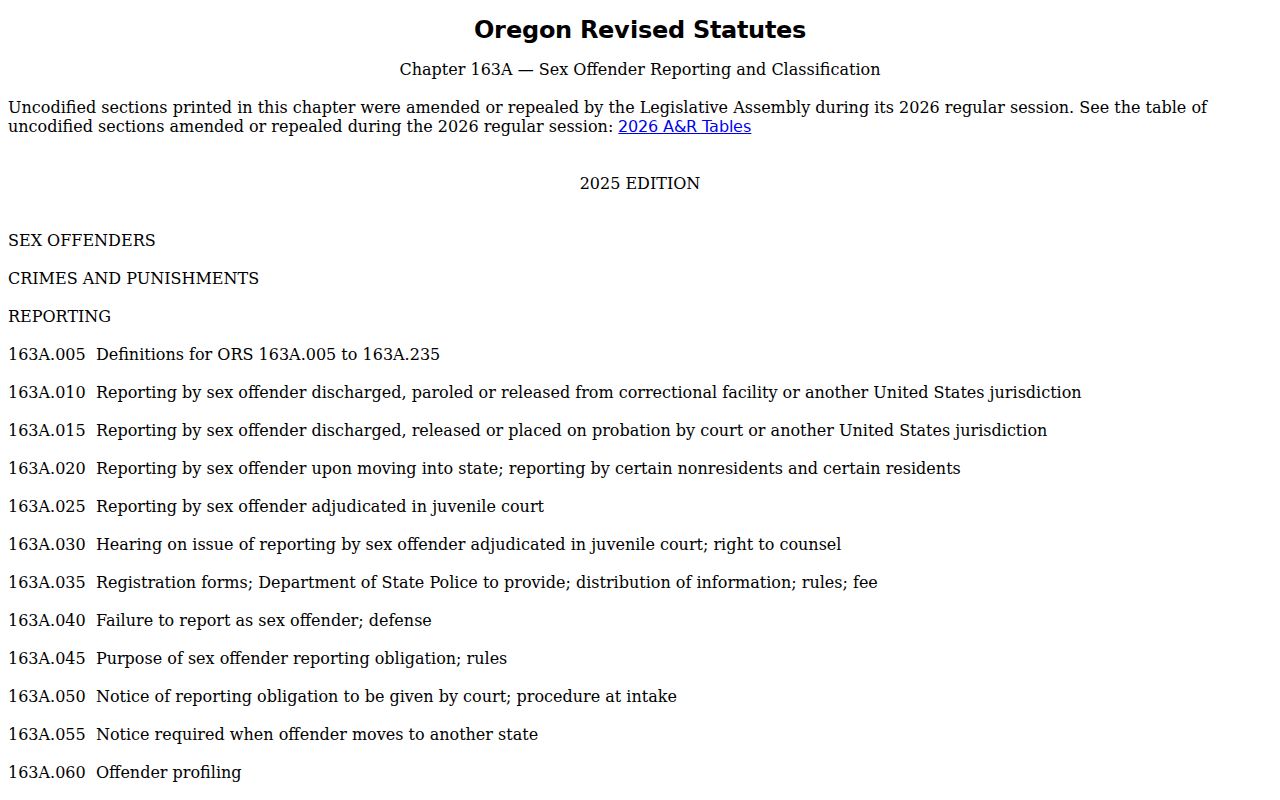
The statute, not a generic federal tier chart, controls Oregon duties and relief.
Community Notification and Lawful Use
Registry information is meant for awareness and safety planning. Level 2 notice may reach neighbors, schools, child-care sites, parks, churches, businesses, and places potential victims frequent. Level 3 permits the broadest notice. Use the information to make calm, lawful choices and confirm concerns with the agency.
Community notification may reach different audiences based on Oregon's level assessment. A Level 2 notice can be targeted without creating a broad public-web profile. Level 3 is the widest form. That is why a Lane County search should be treated as one safety tool, not a complete count of registration duties.
When a profile appears inaccurate, preserve the public URL and note the field in question. Contact OSP or the correct Lane registering agency. Do not post the person's private details, visit an address, or attempt to test compliance. Law enforcement has access to nonpublic verification information and can determine whether follow-up is warranted.
Misuse is unlawful: Threatening, harassing, intimidating, or confronting a registrant or household with registry data can violate ORS chapter 163A and other Oregon law. Report concerns to law enforcement.