
Checking Criminal History in Eugene
Start by naming the record, not the person alone. Eugene Police holds incident and arrest reports. Eugene Municipal Court holds its own citations, filings, hearings, and judgments. Lane County Adult Corrections shows current county custody, while Springfield Municipal Jail can also house a person arrested on a Eugene matter. The Lane County Circuit Court becomes the right source when prosecutors file a state misdemeanor or felony. Oregon State Police is the final statewide layer, but its public Open Record is narrower than a full fingerprint-based self-review.
- Ask Eugene Police Records for the incident or arrest report and give a date, location, subject, and crime type when known.
- Search Eugene Municipal Court for a city case before paying for copies.
- Check both Lane County Jail and Springfield Municipal Jail when the question is current custody after a Eugene arrest.
- Use Lane County Circuit Court for state charges, judgments, and sentencing records.
- Order the correct Oregon State Police product when the goal is a statewide record rather than one Eugene event.
This order keeps unlike records separate. A police narrative may describe allegations that never became a filed charge. A court judgment gives the legal outcome, while a jail entry only shows custody. For broader county case detail, use the Lane County criminal court case search.
Eugene Warrant Records Stay Personal
Eugene uses an unusually strict route for wanted-status questions. Police staff will not disclose wanted status by phone and will not check it for a second party. A person may ask about only their own status at Police Records and must show government identification. The issuing court remains the source for the court record behind a warrant, including whether a docket shows an issue, recall, or later action.
The official Eugene warrant-check instructions show why a web search or phone call cannot replace the in-person step. The image below captures that city guidance.
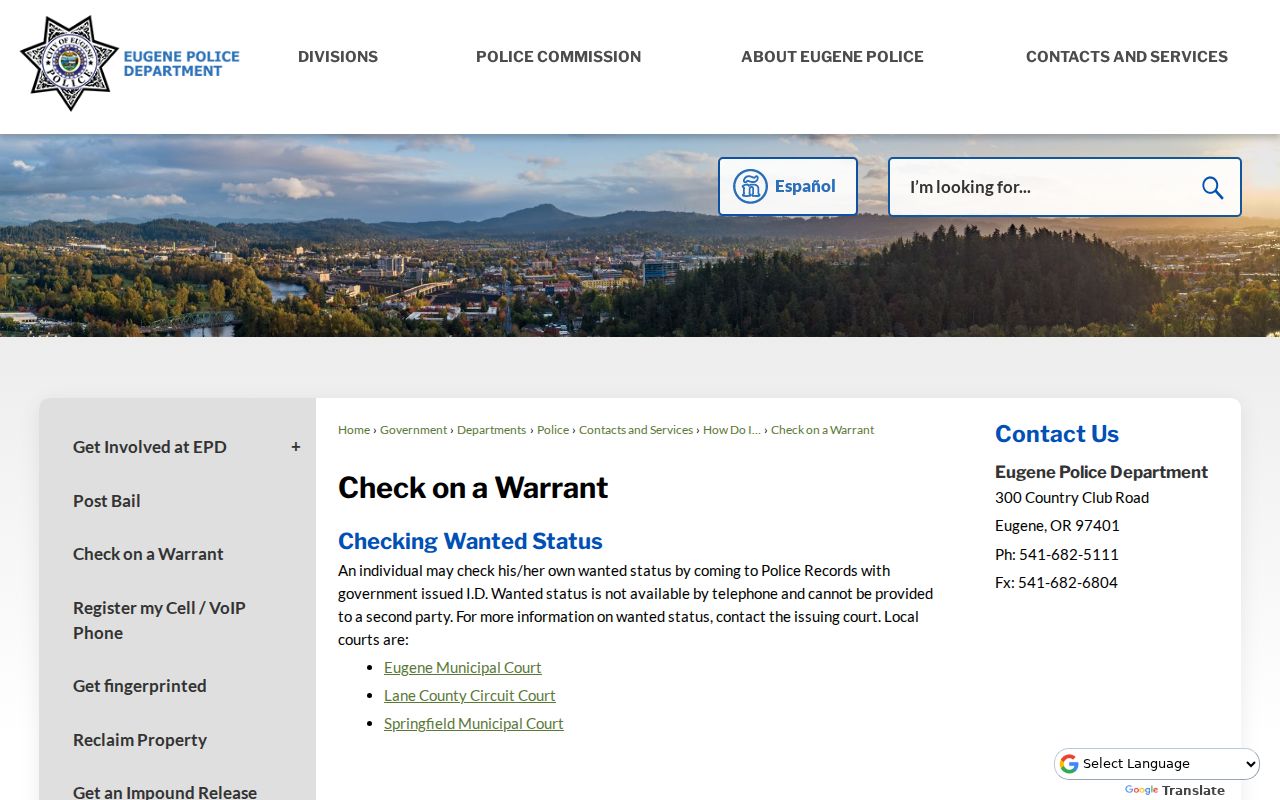
A no-answer by phone is part of the city rule, not proof that no warrant exists. Bring identification to Eugene Police Records, then contact the named court for the underlying case.
Eugene Police Department Records
Eugene Police Records works from 300 Country Club Road. The main and nonemergency line is 541-682-5111; Records is 541-682-5131, and the fax line is 541-682-6804. Its request form asks for the event date, subject, location, crime type, date range, location of the request, details, requester name, telephone number, and mailing address. These fields help staff distinguish one Eugene report from similar names or events.
The printed starting charge is $22. Requests begin with a Level 1 classification and review, so release is not the same as copying an unredacted file. Active investigation material, victim or minor details, and safety-sensitive facts can be withheld under Oregon law. The form also warns that a record left unclaimed for 30 days may not remain ready for pickup.
The Eugene Police Records page is the source for the current request channel and office details.
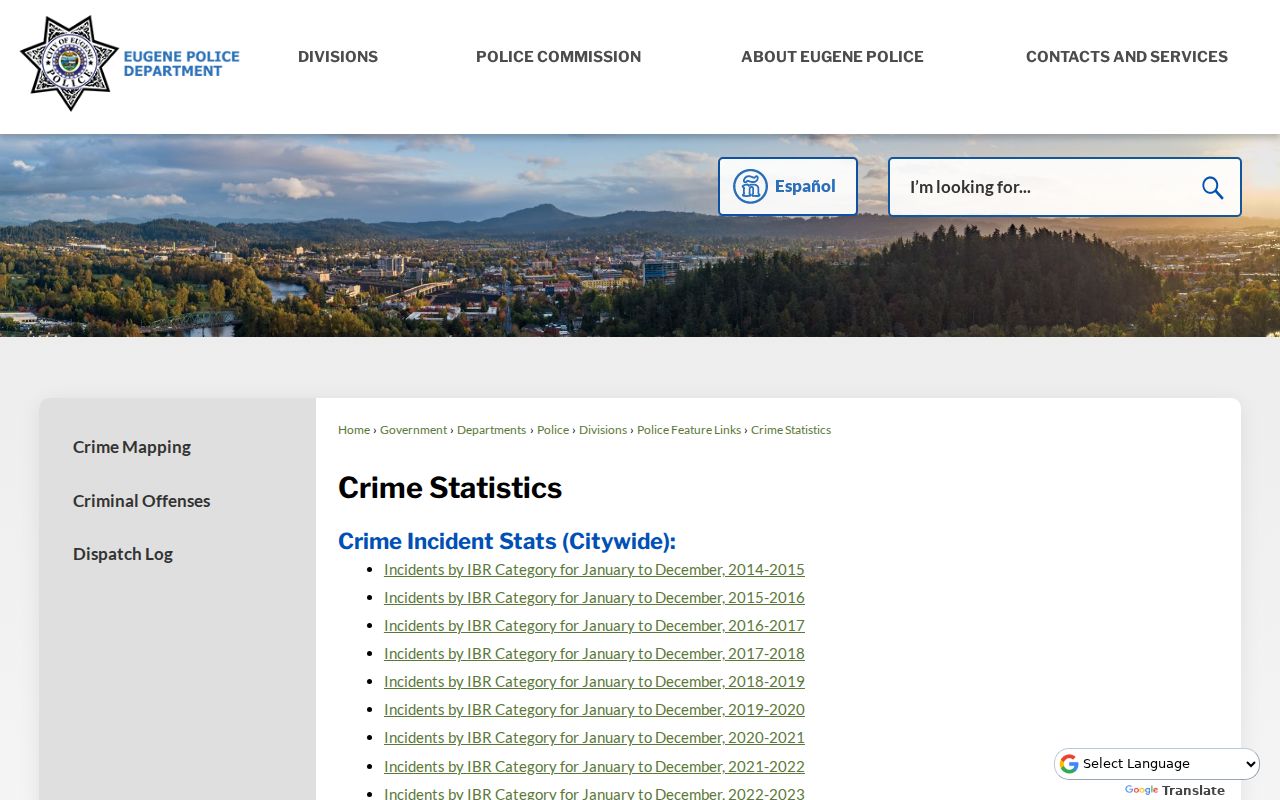
Use that city channel for the agency narrative. The municipal court cannot supply a police report merely because the event later produced a citation.
Eugene Police Record Workload
Eugene's 2024 annual report gives useful scale without claiming that activity measures are crime rates. Police logged 87,839 public calls for service and 27,247 officer-initiated calls. The department reported 7,040 arrests or citations in lieu of custody and processed 7,899 online reports through MyPDConnect. Street Crimes recorded 124 arrests, 36 cites in lieu, 182 felony charges, and about 70 search warrants.
Those counts describe police work, not convictions. A citation in lieu may create a court path without a jail booking. A call may end with no report, and an online report may remain an agency file unless charges are filed. Eugene also publishes separate citywide and downtown IBR-category datasets, so readers should not treat a downtown series as a measure for the full city. These distinctions matter when reconciling a Eugene police entry with a court or custody search.
Eugene Arrests and Bookings
Eugene has no identified city jail. Official city bail guidance says a person on a Eugene matter may be housed at Lane County Jail or Springfield Municipal Jail. That makes a single custody lookup incomplete. Lane County's AIC Viewer is limited to people currently held in the county facility; it cannot reconstruct an old Eugene arrest, and a blank result says nothing about Springfield custody.
Eugene Police may issue a citation in lieu of taking someone to jail. When custody does occur, the booking agency creates identifiers, an intake time, initial charges, custody status, and release or security data. Eugene does not publish a mugshot as part of the researched public trail. Historical booking data should be requested from the facility that actually held the person, while the incident narrative stays with Eugene Police.
When Eugene Municipal Court is closed, Police Records may accept bail for Eugene municipal charges only. It takes cash, Visa, or MasterCard, including telephone payment, but not checks or second-party cards. Release paperwork generally takes 45 to 60 minutes after the payment step. County booking channels are covered in the Lane County arrest lookup.
Two Eugene Custody Trails
The safest search compares the alleged offense with the receiving facility. Lane Adult Corrections is the likely county trail for many state charges. Springfield Municipal Jail can hold municipal offenders and may also appear in Eugene bail guidance. If neither current roster shows the person, ask whether the event ended in a citation, release, transfer, or older booking.
Records also age at different rates. A current viewer can change after release. The police report remains with Eugene. A filed charge enters the proper court docket. Later dispositions flow from courts to Oregon State Police CJIS, where fingerprint-supported arrest cycles can be linked to outcomes. Each source answers a different time-based question.
Note: A current-custody search is a status check, not a complete Eugene arrest history.
Municipal Court Records in Eugene
Eugene Municipal Court provides a free basic case search. Use it before ordering a copy, since a docket number is the best way to identify the file. Copy requests may be filed online or by form and are normally completed within 72 business hours, except when research is complex. The form asks for the requester and delivery method, plus the defendant, case or citation number, and exact documents needed. Court staff can be reached at 541-682-5400.
The official Eugene municipal case search is the direct first look at city court information.
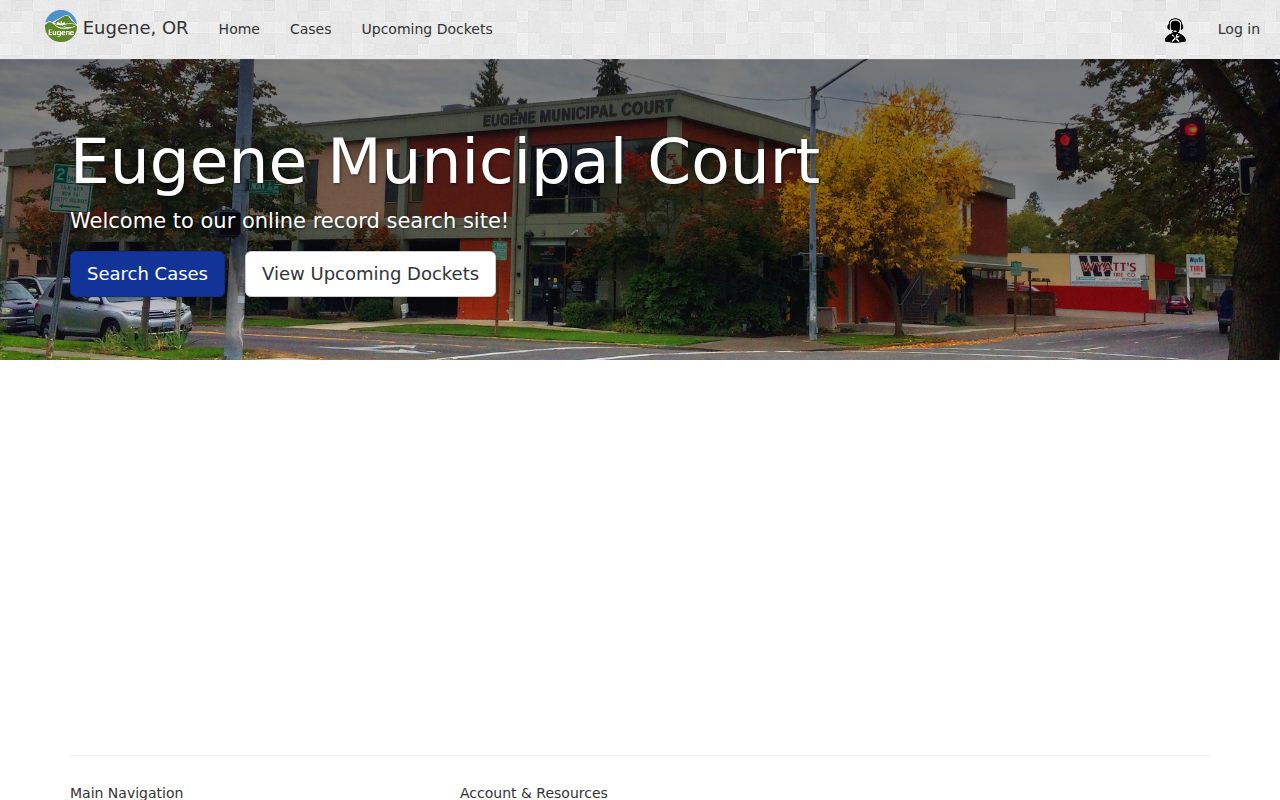
The search helps confirm the city docket before a copy order. It does not replace a Lane Circuit Court search when the district attorney filed a state case.
| Court Name | Eugene Municipal Court |
|---|---|
| Case Types Heard | Listed city misdemeanors, major traffic matters, warrants, and other jailable municipal offenses |
| Case Lookup Channel | Free basic case search, court copy request, or clerk contact |
| What the Docket Shows | Defendant, case or citation identifier, events, hearings, and disposition information available to the public |
| Copies and Timing | Online or form request; normally within 72 business hours unless research is complex |
Weekday in-custody arraignments occur at 11:00 a.m. at Adult Corrections. Criminal arraignments at 10:00 a.m. Monday through Thursday cover listed misdemeanors, major traffic matters, and warrants; the 1:00 p.m. session includes jailable offenses.
Eugene Court Copy Choices
Eugene's court form allows pickup, interoffice delivery, call, fax, mail, email, or in-box handling. It asks when the record is needed and requires enough detail to locate it. Naming the document matters. A docket is not the same item as a judgment, citation, or audio record.
The Eugene Court Records page explains the official copy route.
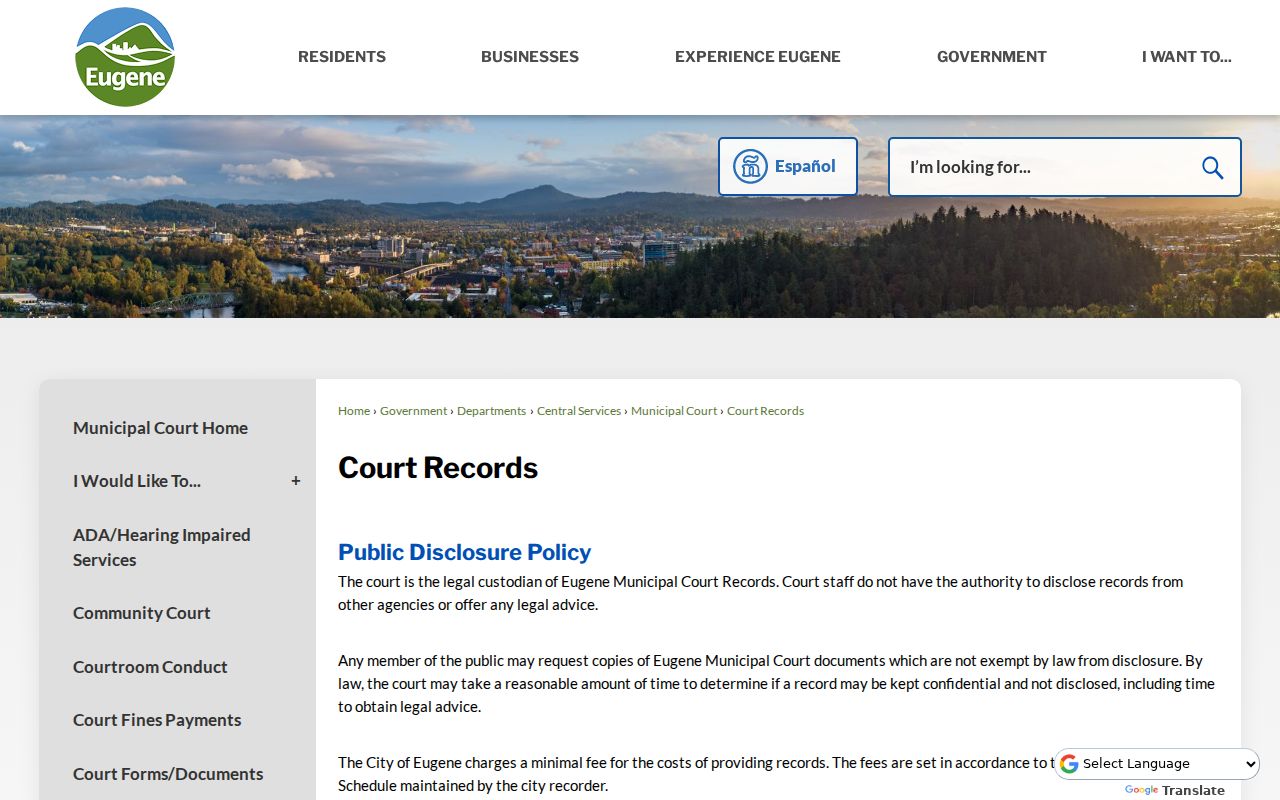
Search first, then request only the public documents needed. That reduces research time and helps court staff match the request to the correct Eugene file.
Where Eugene Records Go
An Eugene incident begins as a police record. If the person is booked, the receiving jail creates a separate intake file and sends fingerprint-supported arrest data onward. A city prosecution creates a Eugene Municipal Court docket; a state felony or misdemeanor creates a Lane County Circuit Court case after a charging decision. Courts then report outcomes for matching in the state repository.
Record flow: Eugene Police Department › Eugene Municipal Court or Lane County Courts › Oregon State Police CJIS
Recent events are most likely to be clear at the originating office. Older outcomes are best checked against the court file and, for a statewide view, the appropriate OSP record. Reporting delays, name-only matches, and unmatched dispositions can leave gaps, so no single Eugene criminal records source should be treated as the whole chain.
Historic Eugene Police Records
Eugene's official publications archive preserves annual reports from 1940 through 1952, 1959 through 1974, and 2010 through 2024. That rare span supports historical or genealogy research without forcing modern custody tools to answer old questions. Annual reports describe agency work and trends, but they are not person-level case indexes.
For a named historical incident, begin with the date and location, then ask Eugene Police whether a releasable report remains. If prosecution followed, check the relevant city or county court archive. The annual report can add context after the individual file is found, not substitute for the police narrative or judgment.
Public Access Rules in Eugene
Eugene Police and Municipal Court are public bodies, yet Oregon law does not make every field open. The custodian reviews the requested item and applies the rule that fits it. Police may redact active-investigation details, protected identities, juvenile material, and facts that create a safety risk. Courts exclude sealed and otherwise confidential files. OSP applies its own narrower dissemination rules to statewide criminal-offender information.
Key Statutes:
Oregon Public Records Law, ORS 192.311-.478 requires release of nonexempt public records and permits recovery of actual costs.
ORS 181A.220, .230, and .245 restrict CJIS data and define the narrower public criminal-record product.
ORS 137.225 permits eligible conviction and charge records to be set aside and sealed after legal conditions are met.
A denial or redaction should be read with the custodian's stated legal ground. Asking for a police report from the court, or a city judgment from police, will not work because the offices keep different products.
Reading Eugene Criminal Records
Common fields include an incident or case number, date, agency, allegation or filed charge, event history, and disposition. Arrest means a person was taken into custody or cited; it does not prove guilt. Disposition means the outcome of a charge. The Register of Actions is the court's dated list of filings and events. A judgment records the final disposition and sentence.
- Citation in lieu
- A citation issued instead of jail lodging, which may still lead to a Eugene court case.
- Arraignment
- The appearance at which charges and plea or case status are addressed.
- Security or bail
- Financial assurance tied to release and future court appearance.
- Set aside
- An Oregon order under ORS 137.225 that seals an eligible charge or conviction record.
Compare like fields across sources. An arrest allegation can differ from the charge filed, and the judgment may resolve only some counts. That is why the police report, booking record, and court file should remain distinct during a Eugene record check.