
Checking Criminal History in Lane County
Lane County has no single criminal-history database. Start with the record type. The free Oregon Judicial Department search is best for basic Circuit Court case and calendar data. The Lane AIC Viewer covers current county jail custody only. Police reports remain with the agency that made the report, and Oregon State Police CJIS handles state repository checks.
Gather a complete name, spelling variants, date of birth when a form lawfully asks for it, an agency case or court number, and a narrow date range. Then compare identifiers across sources. A common name without a case number can produce a false match.
- Choose court, jail, police, warrant, registry, or statewide criminal-history data.
- Search the correct official portal or contact the record custodian.
- Match the case number, agency, date, and other public identifiers.
- Pull the underlying report, Register of Actions, judgment, or booking record.
- Order a certified court copy or OSP product when an official record is needed.
Lane's Four Arrest Records
One arrest can produce four different records. The arresting agency writes an incident or arrest report. Adult Corrections creates the booking file if the person enters custody. The District Attorney reviews the referral, and Circuit Court creates a file only if charges are filed. Fingerprint-supported data can also reach Oregon State Police CJIS.
| Record | Custodian | What It Answers |
|---|---|---|
| Incident report | Arresting agency | What officers recorded about the event |
| Booking record | Lane Adult Corrections | Custody intake, allegations, and release status |
| Court file | Lane Circuit or municipal court | Filed charges, hearings, disposition, and sentence |
| Repository record | OSP CJIS | Identity-linked Oregon submissions and outcomes |
These files can disagree because they capture different stages. The filed court charge may differ from the booking allegation, and a later dismissal may not be clear from a current-custody result.
Oregon Official Background Checks
Oregon State Police Criminal Justice Information Services is the state repository. Its Open Record product is an Oregon-only name check of another person. It costs $33 even when no record is found and is not fingerprint-confirmed.
If reportable data exists, OSP identifies the requester to the subject, sends the proposed record to that person, and waits 14 days for a challenge before release. A person reviewing their own record submits a new FD-258 fingerprint card with the OSP form. The own-record search is $33, OSP fingerprinting is $30, and optional notarization is $5 per copy.
Open Records Is Not Instant
Oregon Open Records asks for the subject's complete name, date of birth, and current or last-known mailing address. Aliases or maiden names help match the right record. The public product can disclose convictions and arrests less than one year old when OSP has not received an acquittal or dismissal.
Name and physical-description matching can produce uncertainty. For self-review, a newly rolled fingerprint card gives OSP a stronger identity match. OSP does not reuse old prints. A local competent provider may roll the card, or OSP offers weekday walk-in fingerprinting at its Salem headquarters with government photo ID.
| OSP Service | Cost | Key Point |
|---|---|---|
| Open Record name check | $33 | Oregon only; paid even with no result |
| Copy of Own Record | $33 | Requires a new fingerprint card |
| OSP fingerprinting | $30 | Valid government photo ID required |
| Optional notarization | $5 per copy | Requested with the OSP process |
Criminal Record Types
Criminal history is an umbrella term. A Lane County police report, booking entry, court docket, warrant, rap sheet, supervision entry, and registry profile answer different questions. The right custodian depends on who created the record.
LCSO Police Records releases eligible sheriff reports, citations, and CAD logs. Adult Corrections handles jail files. Lane Circuit Court Archives supplies court documents. OSP CJIS maintains repository data. Lane Parole and Probation records local community supervision, and OSP manages the sex offender registry.
- Arrest and booking records document enforcement and custody, not guilt.
- Criminal court files show filed charges, pleas, motions, judgments, and sentences.
- Repository entries compile identity-linked agency and court submissions.
- Warrants originate with the issuing court and may have restricted details.
- Supervision and registry records show distinct post-case duties or status.
Lane's 2014 Digital Divide
Public terminals on the main floor of the Lane County courthouse provide free digital viewing for case files begun in 2014 or later. Older files go through Court Archives. A portal no-result or missing image may therefore reflect age, a municipal court, confidentiality, or a search mismatch rather than the absence of a case.
Archives requests should name both parties, an approximate filing date, the case number if known, and the precise document needed. Court records cannot be ordered by telephone, although staff may provide some case information. Standard paper copies cost $3 plus 25 cents per page. Certification costs $5 plus 25 cents per page, and exemplification costs $10 plus 25 cents per page.
Inside a Lane County Criminal Record
Read the fields in sequence. Identity information ties a person to an event. Charges state allegations or filed counts. The disposition tells how each count ended, and the judgment records the formal outcome. Sentence and supervision fields follow only where the court imposed them.
| Name and Identifiers | Names, aliases, date of birth, and agency or court identifiers when public. |
|---|---|
| Arrest and Booking | Agency, event date, booking number, custody status, and intake allegations. |
| Charges and Statutes | Offense labels and Oregon statute citations at the relevant stage. |
| Disposition | Dismissal, acquittal, conviction, or another outcome for each count. |
| Sentence | Custody, fines, restitution, treatment, or other court terms. |
| Custody or Supervision | Current jail, prison, probation, parole, or post-prison status where public. |
Current Jail or State Custody
The Lane AIC Viewer covers current county custody only. Historical lodgings were removed because Lane found them prone to misuse and misreading. Booking photos also disappeared from routine public display after Oregon HB 3273 took effect in 2022.
Use VISOR for statewide custody and notification features, including release, transfer, escape, death, and some supervision changes. The Oregon Offender Search covers state correctional custody or supervision. Federal custody uses the Bureau of Prisons locator. No one locator substitutes for the court judgment.
Public Access Laws in Oregon
Oregon law favors access to many government records but preserves court confidentiality, criminal-history dissemination limits, and set-aside protections. The custodian may charge actual costs and may require advance payment. Redactions can protect victims, juveniles, personal identifiers, pending investigations, and confidential CJIS data.
Key Statutes:
ORS 192.311-192.478 governs Oregon public-record requests and cost recovery.
ORS chapter 181A governs CJIS confidentiality and public criminal-history dissemination.
ORS 137.225 governs motions to set aside eligible convictions and charge records.
ORS chapter 163A governs sex offender registration, notification, relief, and misuse.
Lane Sheriff Record Boundaries
LCSO Police Records is at 125 East 8th Avenue, Room 140, Eugene, with a direct line of 541-682-3775. It releases eligible sheriff police reports, citations, and incident or CAD logs through an online portal or mailed form. Jail records use the separate Adult Corrections process.
The Lane County Sheriff's Office source identifies the agency and its services.
City police departments keep reports they create. The county's general NextRequest portal excludes police, jail, Circuit Court, District Attorney, and several other records from its custody.
Lane Warrants Need Court Checks
No official public Lane Sheriff warrant-name list was confirmed. A warrant event may appear in OJD or OJCIN, but sealed indictments, juvenile warrants, and unexecuted search warrants are often unavailable. Circuit Criminal Case Information is 541-682-7692, while a municipal warrant belongs with the issuing city court.
Lane's official instructions say a person dealing with an old arrest warrant may report to the second-floor courthouse information booth between 8:00 and 8:15 a.m. on weekdays for a voluntary appearance. Verify the instruction with the court first. It is not a promise about release or security.
Identify the issuing court before trying to resolve a warrant. Check the public docket, call the court rather than emergency dispatch, consult counsel when appropriate, and bring the case number and identification to any directed appearance. Confirm later that a recall or quash entry reached the docket because linked databases can lag. Eugene Police follows a different municipal rule: it checks only the requesting person's own wanted status in person with government identification and will not disclose that status by phone or to another person.
Warrant records may state the court, case number, type, issue date, reason, underlying charge, security term, service date, and recall event. Some of those fields remain restricted while a warrant is active. A focused records request cannot override a sealed case or an active-investigation exemption.
Sealed, Expunged, and Restricted Records
Oregon calls its relief process a motion to set aside under ORS 137.225, though courts also use the word expungement. Eligibility depends on the offense, result, waiting period, later history, and other statutory rules. Juvenile, sealed, mental-health, adoption, and VAWA-protected matters may be absent from public court tools.
A granted set-aside changes public access but does not mean every government use disappears. A search no-result also cannot prove that a record never existed. Review the order and confirm the current court and OSP record. Lane court provides local forms and process guidance for eligible people reviewing their own history.
Inside Lane's Records Hub
The Public Service Building at 125 East 8th Avenue in Eugene houses Lane Circuit Court, Sheriff's headquarters, Court Archives, the District Attorney, county administration, and the Law Library. This concentration is useful, but each office keeps separate records.
The Lane County government source provides the central county entry point.
The courthouse has public terminals and weekday hours from 8:00 a.m. to 5:00 p.m. Security screening is airport-style, and prohibited items are not stored. Records visitors should plan for paid parking.
Lane Circuit Court
125 East 8th Avenue
Eugene, OR 97401
541-682-4020
Lane Adult Corrections
101 West 5th Avenue
Eugene, OR 97401
541-682-4263
Lane Parole and Probation
75 West 5th Avenue
Eugene, OR 97401
541-682-3040
Lane's Charge Pipeline
The Lane County District Attorney reviews police referrals and chooses what, if anything, to charge. Its Criminal Division reports 24 trial lawyers reviewing about 5,000 to 6,000 new referrals each year. Those figures describe workload, not a count of convictions.
The Lane District Attorney source describes the office and divisions.
A booking allegation can change or disappear at this review stage. The Circuit Court file is the source for charges actually filed and their outcome.
Lane County Criminal Records by City
Eugene, Springfield, and Cottage Grove are Lane County's three largest incorporated cities. Their police departments retain local reports, and each municipal court keeps its own case records. Eugene arrestees may enter Lane or Springfield custody. Springfield operates a municipal jail, while Cottage Grove maintains distinct police, court, and city-record channels at one address.
Eugene Criminal Records
178,618 · Eugene Police records, municipal case search, and two possible jail routes.
Springfield Criminal Records
61,431 · Springfield Police, Municipal Court, and the 344 A Street city jail.
Cottage Grove Criminal Records
10,851 · Police Records, NextRequest, Municipal Court, and a city jail.
Oregon Law Shapes Access
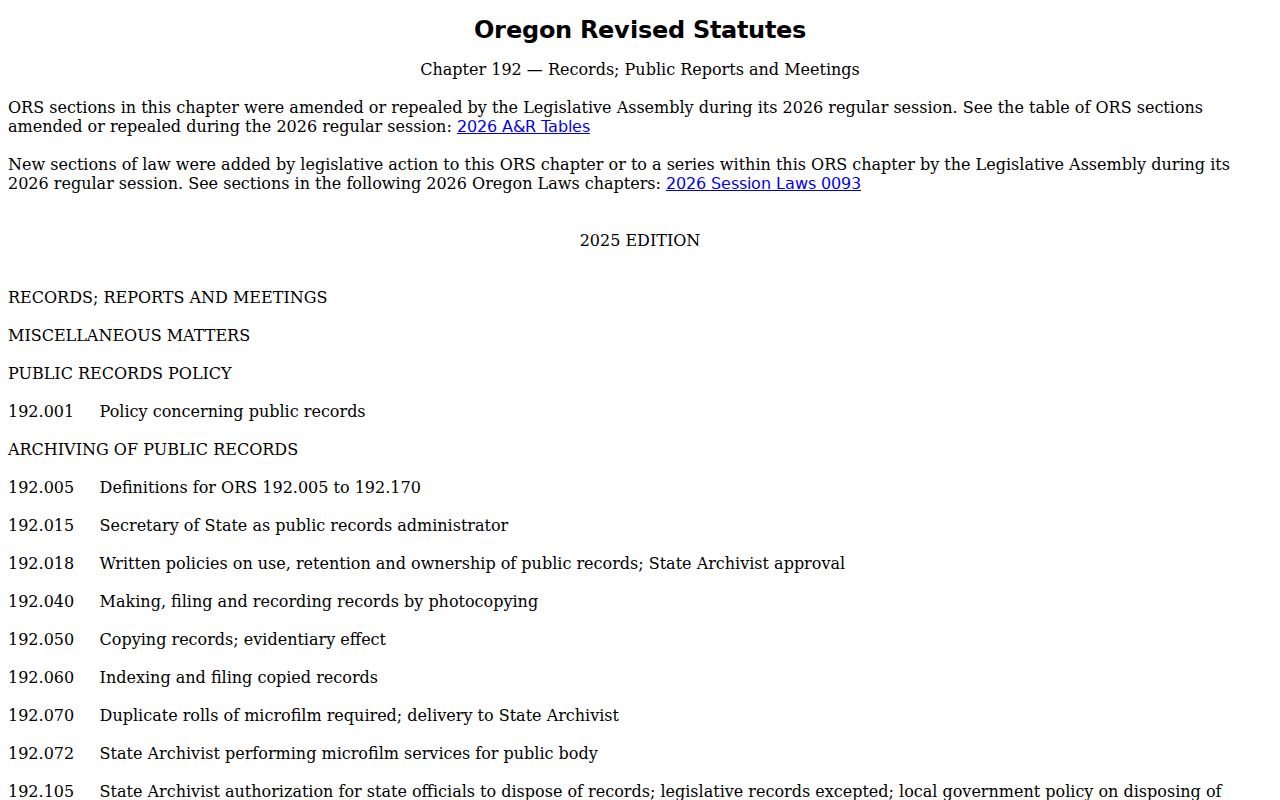
The Oregon Public Records Law source is the official statute chapter for requests and exemptions.
It does not turn every justice record into an unrestricted public file. Court access rules, CJIS restrictions, victim protections, juvenile confidentiality, and active-investigation exemptions still apply.
The OSP CJIS source shows the state criminal-history repository.
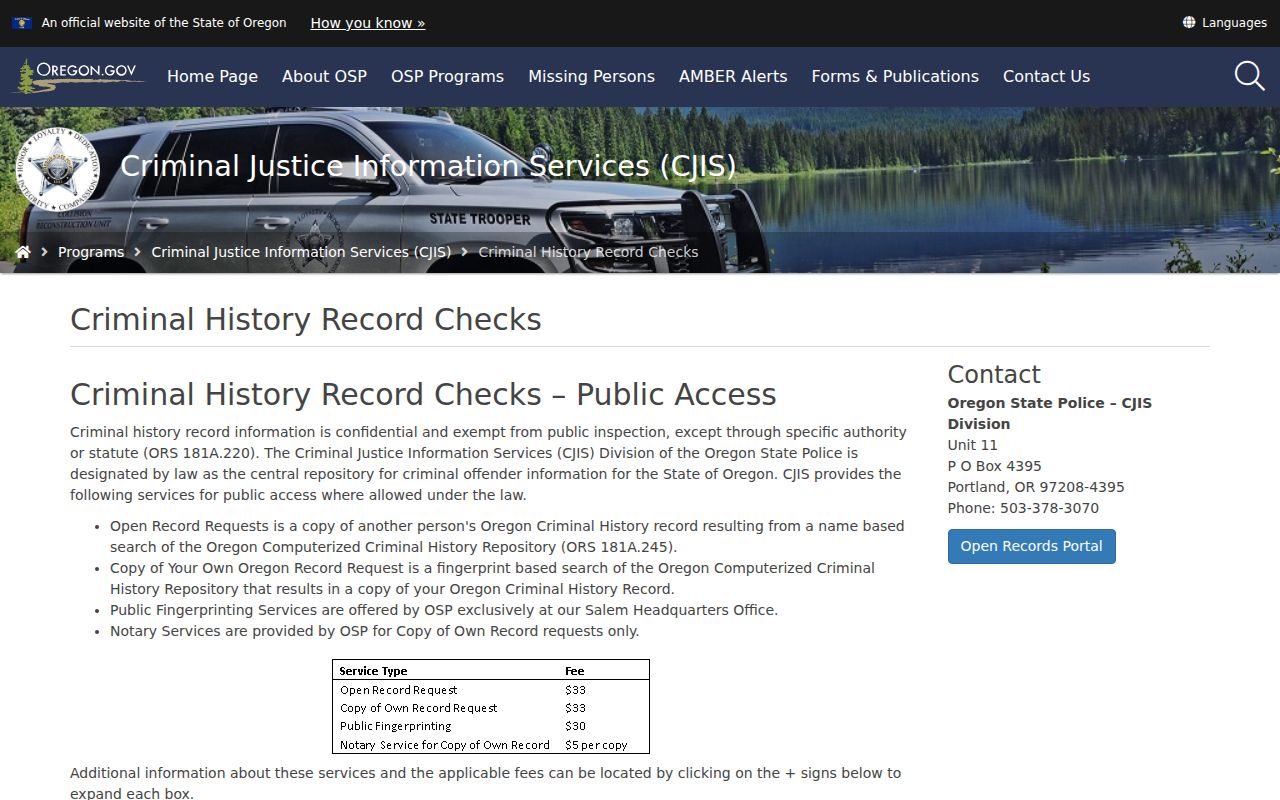
OSP is the correct source for an Oregon repository product, while Lane agencies remain the source for their original reports.
Lane Supervision Records Explained
Lane County Parole and Probation performs local community supervision through Oregon's hybrid state and county structure. Probation usually follows a court judgment and is supervised locally. Post-prison supervision follows release from prison. The Oregon Board of Parole and Post-Prison Supervision makes specified parole and release decisions, while ODOC maintains state correctional data.
Supervision status should not be inferred from an old sentence alone. Conditions can change, supervision can end, and a portal may lag. Compare the judgment with the current supervising agency record. Lane's office is at 75 West 5th Avenue in Eugene and can be reached at 541-682-3040.
- Probation
- Court-ordered community supervision, usually instead of or after part of a jail term.
- Post-prison supervision
- Community supervision after release from an Oregon prison sentence.
- Parole
- A release status governed by the parole authority in cases where Oregon law still uses it.
- Disposition
- The formal result attached to a filed charge.
These records add context to Lane County criminal history, but the court judgment remains the source for the sentence that led to supervision. For a current answer, identify the supervising office, give the court case number, and ask only for public information. Older docket terms may not describe present status.
Lane Adult Corrections also operates Electronic Monitoring, Community Service, and the Sheriff's Work Crew. Program review can consider conduct, history, sentence length, community support, and current charges. Pretrial placement is decided through Pretrial Release. These alternatives explain why a court file may show supervision or monitoring even when a person is not in the Main Jail.
Police and incident reports require another route. LCSO accepts its own requests online or by mail. Eugene, Springfield, and Cottage Grove each maintain city processes. A strong request identifies the custodian, event, date range, names, case number, desired format, and contact information. Broad wording can increase search time and actual-cost charges.